Processing
Growing Potatoes for Chips/French Fries — What Processors Actually Need
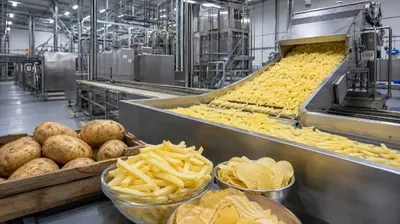
Potatoes grown for chips and French fries are not always the same as potatoes sold in the fresh market. Processors look for specific characteristics such as dry matter, size, shape, sugar content, skin quality and processing performance.
Farmers who know the processor’s requirements before planting can select a more suitable variety and manage the crop accordingly.
What Do Processors Look For?
| Quality Factor | Why It Matters |
|---|---|
| Variety | Different varieties are suited to different processing products |
| Size & shape | Helps achieve uniform chips or French fries |
| Dry matter | Higher suitable dry matter can improve processing yield and texture |
| Reducing sugars | Lower levels help produce better colour during frying |
| Tuber quality | Fewer cuts, bruises, greening and defects are preferred |
| Uniformity | Consistent tubers make processing easier |
| Storage quality | Potatoes should maintain suitable processing quality during storage |
1. Choose the Variety for the End Product
A variety suitable for table potatoes may not perform well for chips or French fries.
Before planting, farmers should know what product the processor is buying and which varieties are accepted for that product. Processor-approved varieties can differ between chips, French fries and other processed products.
Do not select a variety only because it gives high field yield.
2. Dry Matter and Tuber Quality Matter
Processors generally prefer potatoes with suitable dry matter and specific gravity, depending on the product.
For French fries, suitable tuber size and shape help produce uniform fries. For chips, processing quality and frying performance are particularly important.
The final requirement can vary by processor, product and contract.
3. Sugar Content Affects Frying Colour
Reducing sugars such as glucose and fructose can increase during certain conditions, particularly after storage at unsuitable temperatures.
Higher reducing sugar levels can cause darker frying colour and affect product quality.
This is why processors may test potatoes before accepting a lot.
4. Avoid Physical Damage
Cuts, bruises, greening, rot and other defects can reduce the value of processing potatoes.
Careful harvesting, handling, transport and storage are therefore important—not just crop production.
5. Know the Processor's Specifications Before Planting
Farmers should discuss the requirements with the buyer or processor before sowing.
Check:
- Accepted variety
- Required tuber size
- Quality standards
- Dry matter requirement
- Sugar/frying colour requirements
- Rejection limits
- Expected quantity
- Delivery period
- Price and quality-linked deductions
Farmer → Processor: What Should Be Planned?
Before planting: Confirm variety and buyer requirements
↓
During crop growth: Maintain balanced nutrition and irrigation
↓
At harvest: Handle tubers carefully and avoid damage
↓
After harvest: Grade and store according to processing requirements
↓
Before sale: Check quality against processor specifications
PB Takeaway
For processing potatoes, the buyer's requirement should be understood before the crop is planted. Variety, size, dry matter, sugar content, tuber shape and physical quality can all affect processing value.
Farmers should avoid choosing a variety based only on yield. Know the end product, confirm the processor's specifications and then plan the crop accordingly.