Market & Trade
How Government Subsidies Can Reduce Your Cold Storage Investment Cost
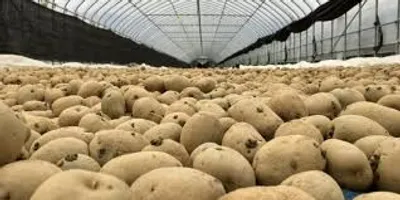
Cold storage plays a critical role in the potato value chain, especially in managing price fluctuations, storage losses, and supply timing. However, setting up or upgrading a cold storage facility requires high capital investment, which can often be a barrier for farmers, traders, and entrepreneurs.
To address this, the government provides multiple subsidy schemes and financial support programs to encourage the development of cold storage and warehouse infrastructure across India. 🧊 Why Cold Storage Matters Potatoes are highly sensitive to temperature and storage conditions. Without proper storage: Post-harvest losses can increase significantly. Prices drop due to excess supply. Farmers are forced to sell at lower rates. Cold storage helps in: Extending shelf life. Selling at the right time for better prices. Maintaining quality for exports and processing. 💰 Key Government Subsidy Schemes 1. Mission for Integrated Development of Horticulture (MIDH) Under this scheme: Subsidy of 35% to 50% is provided for eligible cold storage projects. Higher subsidy is available for hilly and northeastern regions. Covers infrastructure such as cold rooms, pack houses, and ripening chambers. 2. Pradhan Mantri Kisan Sampada Yojana (PMKSY) This scheme focuses on food processing and supply chain development. It provides: Financial assistance for mega food parks and cold chain projects. Support for integrated cold chain infrastructure from farm to market. Incentives for private investment and export-oriented units. 3. NABARD Subsidy & Loans NABARD provides: Low-interest loans for setting up cold storage facilities. Credit-linked subsidy schemes. Financial support for rural warehousing and agri-infrastructure. 4. Agriculture Infrastructure Fund (AIF) One of the most important schemes currently available. It offers: 3% interest subvention on eligible loans. Credit guarantee support. Financing for warehouses, cold storages, grading, and sorting units. 📊 Cost vs. Benefit Perspective Setting up a cold storage unit can cost ₹5 crore to ₹15 crore or more , depending on capacity and technology. With government support: Initial project cost can reduce by 30–50% . Payback period becomes shorter. Profitability improves through better price realization. ⚠️ Challenges to Consider Even with subsidies, there are practical challenges: Complex approval and documentation process.
High electricity and maintenance costs. Need for proper utilization (empty storage means financial loss). Strong market linkage is essential for profitability. 🚀 Practical Tips Start with small or modular storage units instead of making a large initial investment. Tie up with farmers or traders for assured storage utilization. Focus on processing-grade potatoes for higher returns. Combine subsidy schemes with bank financing to improve cash flow. Always check the latest eligibility criteria before applying. 📈 Future Opportunity With increasing demand from: Processing companies (chips and fries). Export markets. Organized retail. Cold storage is becoming a strategic asset rather than just storage infrastructure. Farmers and traders who combine storage, market timing, and strong buyer linkages can significantly improve their profit margins.
🧾 QUICK SUMMARY Government provides 30–50% subsidy for eligible cold storage projects. Major schemes include MIDH, PMKSY, NABARD, and the Agriculture Infrastructure Fund (AIF) . These schemes help reduce project costs and improve profitability. Success depends on proper planning, efficient utilization, and strong market linkages.