Market & Trade
Challenges Confronting India’s Potato Processing Sector
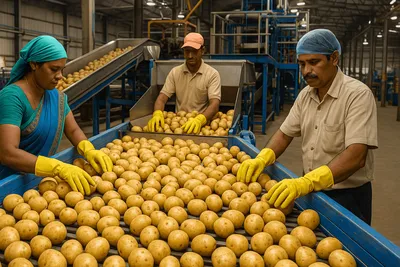
The domestic processing industry—a critical potential lifeline—is hampered by structural deficiencies and rising global competition, particularly from China. The ability of Indian processors to capitalize on current low farm-gate prices is limited, highlighting a significant disconnect in the value chain. The China Factor: Margin Erosion in Frozen Exports China, the world’s largest potato producer, processes a significantly larger share of its output (around 15%) compared to India's meagre 7-8%. China's increasing output of processed products, like frozen French fries, is intensifying competition in India's primary export markets, particularly across Asia.
Volume and Margin Pressure: China's large-scale, improving, and often state backed processing sector enables it to compete aggressively on price. Indian frozen fry exporters, while currently undercutting competitors like the US and Belgium in price-sensitive markets (e.g., Japan, Singapore), face margin pressure from chinese rivals who are achieving greater economies of scale and efficiency. The Quality Deficit: The ultimate challenge is consistency. China, though still lagging behind European players, is rapidly adopting automated technology and improving quality control.
India's processing industry struggles with a quality paradox: only about 8-10% of its total potato yield meets the stringent global standards required for high-quality frozen products (e.g., high dry matter, uniform size, specific sugar content). China's emergence as a formidable processing player means that the long-term margin potential for Indian processors relying solely on volume is shrinking, demanding a pivot towards high quality, specialized products. Domestic Bottlenecks: Raw Material and Infrastructure The most severe limitations for India's processors are domestic, preventing them from absorbing the massive table potato surplus: Variety Mismatch: The bumper harvest consists primarily of table varieties, which have a low dry matter content (high moisture) and unsuitable starch profiles.
Processing this stock results in poor quality products, high trimming losses, and excessive oil absorption (for chips/fries), making it financially unviable. Inadequate Cold Chain for Processing: While India has cold storage, much of it is not built to the precise temperatures required for preserving processing-grade potatoes (which require specific, higher storage temperatures than table varieties to prevent sugar accumulation). The storage system is often monopolized by large corporations for specialized varieties, leaving regular farmers (and smaller processors) without adequate space.
Weak Contractual Linkages: Processors require a consistent, year-round supply of uniform quality. The lack of robust, enforceable contract farming for specialized varieties creates unpredictable supply, driving up raw material costs and hampering the ability to maintain production schedules. Policy and Future Outlook: A Dual Focus The Government of India has recognized the sector's importance through schemes, but execution and targeting need refinement. PLISFPI and Operation Greens: Schemes like the Production Linked Incentive Scheme for Food Processing Industry (PLISFPI) and the revamped Operation Greens aim to boost processing capacity and reduce post-harvest losses.
PLISFPI, in particular, offers financial incentives to create global food manufacturing champions. The Solution: The long-term solution lies in a dual focus: Farmer Incentives: Providing R&D and seed subsidies to encourage farmers to shift a greater share of their land to high-demand processing varieties. Infrastructure Investment: Investing in specialized, climate-controlled cold storage facilities that cater specifically to the quality requirements of the processing industry, thereby closing the gap between the farm and the factory. Without addressing these structural bottlenecks, the Indian processing industry will remain unable to act as the necessary price stabilizer against the cyclical bumper harvests of table potatoes.