Market & Trade
India's ₹30,000 Cr. Potato Meltdown: A Bumper Harvest's Economic Backlash
India's ₹30,000 Cr. Potato Meltdown: A Bumper Harvest's Economic Backlash
Potato Bazaar Desk5 December 20259 min read
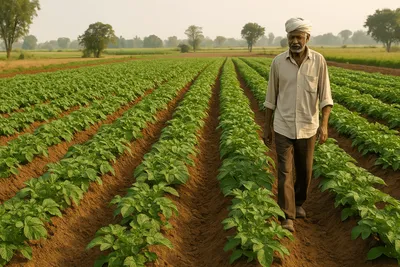
The Indian potato industry, valued at ₹1.2 lakh crore, is grappling with an existential crisis. A record bumper harvest in 2024-25 has created a massive supply glut of table potatoes, causing farm-gate prices to crash by over 30% in key markets. This price erosion is projected to result in an estimated ₹30,000 crore loss across the entire supply chain, severely impacting the financial viability of millions of growers, as well as cold storage operators and traders. The domestic crisis is compounded by a weak global market that offers little relief via exports. The Paradox of Plenty: Domestic Supply Shock India’s potato production reached a record high of nearly 60 million tonnes in the 2024-25 crop year, a significant jump from the previous year. This output, driven by favorable weather and expanded acreage, has overwhelmed the market, particularly for the common, non-processing table varieties. The unprecedented supply glut has exposed critical structural weaknesses in the value chain, particularly in cold storage and market linkages. Wholesale prices in major North Indian consumption centers have plummeted by between 30% to 50% compared to the previous year. This sharp price drop means that in many agricultural markets, the price of a quintal (100 kg) of potatoes has fallen to a rate that is dangerously close to or even below the average cost of production (CoP) for most marginal farmers. Stakeholder Financial Distress and Farmer Debt The sharp 30%+ fall in farm-gate prices is translating directly into financial ruin for multiple stakeholders: Farmers: Selling produce below CoP erodes their working capital, forcing them into distress sales and increasing dependence on high-interest private credit sources. Reports indicate that in major producing states, potatoes are being sold for prices that are financially unsustainable. Furthermore, many farmers are unable to utilize government procurement schemes due to stringent documentation requirements, leaving them vulnerable to market exploitation. This growing debt burden threatens the stability of the entire rural economy. Cold Storages and Traders: The ₹30,000 crore loss is shared by traders and cold storage operators. When market prices crash, traders who purchased stock earlier face huge inventory losses. Cold storages, in turn, face challenges in recovering storage fees and suffer from depressed rentals and underutilized capacity as subsequent planting and storage cycles become uncertain. Global Headwinds and Limited Export Relief Relief via the global market, typically a buffer against domestic oversupply, remains elusive: The Global 'Potato Flood': International markets, particularly in Europe, are also witnessing a "Potato Flood" due to expanded planting and record yields. This global oversupply has pushed international free-market prices down sharply, intensifying competition and making Indian table potato exports less viable despite favorable exchange rates. Focus on Processed Goods: While India’s exports of processed potato products (dehydrated granules, frozen fries) have seen strong growth, the vast majority of the current surplus is comprised of table varieties, which cannot easily be diverted to the processing segment due to unsuitable starch and moisture content. The Volatility Trap: Future Supply at Risk The long-term implications of this crisis are severe. Widespread losses today are likely to trigger the volatility trap is leading to: Reduced Acreage: Faced with crippling financial losses, farmers will inevitably reduce their potato planting acreage for the upcoming 2026 season. Future Scarcity: This acreage reduction will lead to a significant supply shortage next year. Consumer Price Spike: Reduced supply will cause potato prices to spike sharply, leading to inflation and hardship for consumers. To break this cycle, immediate policy intervention is required, focusing on increasing the capacity for domestic processing of table varieties and establishing a robust, easy-to-access Price Support Mechanism to ensure all stakeholders, especially farmers, receive a return that covers their costs.
Filed underPotatoPrices