Where to Source Quality Potato Seed — What Farmers Should Check Before Buying
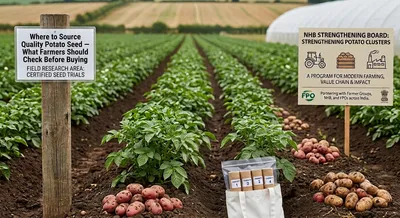
Good-quality seed is the foundation of a healthy potato crop. However, choosing the right variety is only one part of the decision. Farmers also need to consider where the seed comes from, whether it is certified, how it was produced, and how it was stored before purchase.
Buying cheap or unverified seed can increase the risk of disease, poor germination, uneven crop growth, and lower yields. A reliable source may cost slightly more, but quality seed can reduce production risks and improve returns.
Where Can Farmers Source Potato Seed?
Farmers can generally source seed potatoes from certified seed producers, government or agricultural institutions, registered suppliers, farmer groups/FPOs, and trusted dealers. The important point is not just the source but the ability to verify the seed's variety, health, and quality.
What to Check Before Buying
| Check | What to Look For |
|---|---|
| Source | Certified or reliable supplier |
| Variety | Correct variety for your region and market |
| Seed health | Free from visible disease, rot and damage |
| Size | Uniform and suitable for planting |
| Certification | Valid certification/tag where applicable |
| Storage | Properly stored before sale |
| Bill/Record | Purchase details kept for reference |
A farmer should avoid buying seed only because it is cheaper or recommended informally by another grower.
Certified Seed vs. Unverified Seed
Certified seed is produced and monitored under defined quality standards and provides greater confidence about varietal identity and health. Unverified seed may look healthy but can carry hidden diseases or have poor varietal purity.
This is particularly important for potatoes because diseases can multiply rapidly when infected tubers are used as planting material.
Inspect the Seed Before Payment
Before accepting the seed, check the tubers carefully. Good seed should generally be firm, healthy, reasonably uniform, and free from cuts, rot, excessive shrivelling, and obvious disease symptoms.
Also check for excessive or weak sprouts. Seed condition should match the planting plan and storage history.
🚜 Quick Buying Checklist
Before purchasing, ask:
- What is the exact variety?
- Where was the seed produced?
- Is it certified or quality-assured?
- Is the seed suitable for my region?
- Is it suitable for my target market?
- How was it stored?
- Can I get a bill or purchase record?
Don't Choose Seed Only by Price
A lower seed price does not always mean lower cultivation cost. Poor-quality seed can result in gaps in the field, additional disease management, uneven crop growth, and lower marketable yield.
Instead of asking "Which seed is cheapest?", farmers should ask "Which seed gives the best expected value for my crop and market?"
Plan Seed Purchase Early
Buying seed at the last moment can limit variety and supplier choices. Farmers should plan their requirement in advance, compare reliable sources, and confirm availability before the planting season.
It is also important to maintain records of the variety, supplier, quantity, and purchase date. These records can help farmers compare crop performance across seasons and make better seed decisions in the future.
PB Takeaway
Quality seed starts with a reliable source. Farmers should verify the variety, certification, health, size, storage condition, and supplier details before purchasing. Spending a little more time checking seed quality before planting can prevent much larger losses later in the season.