Research & Innovation
How Online Platforms Are Changing Potato Trading in India.
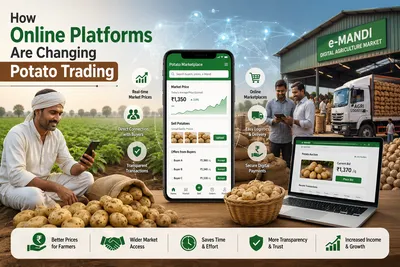
The potato trade is gradually shifting towards digital platforms as buyers, sellers, and market participants increasingly use online systems for communication, price discovery, and business networking. Traditionally, potato trading depended heavily on physical mandi presence, phone-based negotiations, and local trader networks. While these systems continue to remain important, digital trading platforms are now improving market accessibility and information flow across the industry. Connecting the Entire Value Chain Online trading ecosystems are helping connect: Farmers Commission agents Wholesalers Cold storage owners Processors Exporters Transport operators Faster Market Information One of the biggest advantages of digital trading is faster market information access.
Through online platforms, traders can now monitor: Mandi arrivals Price movements Crop updates Storage trends Regional demand patterns This improves transparency and helps market participants make faster business decisions. Expanding Market Reach Digital marketplaces are also reducing geographical limitations. Buyers from different states can directly connect with sellers without depending entirely on traditional local networks. In the potato sector, online platforms are increasingly being used for: Buy and sell enquiries Storage stock listings Transport coordination Processing-grade sourcing Export communication Data-Driven Trading Another major change is the growing importance of data-driven trading.
Market participants now analyse: Supply trends Seasonal arrivals Weather impacts Processing demand Historical pricing patterns before making purchase decisions. This is gradually making potato trading more organised and information-oriented. Supporting Farmers & Traders Digital platforms are also supporting smaller traders and farmers by improving access to broader markets and reducing communication gaps. In India, rapid smartphone adoption and improving internet penetration are accelerating this transition, especially among younger traders and progressive agricultural businesses.
Challenges Despite the progress, some challenges still remain: Trust-building in online transactions Quality verification Payment security Logistics coordination The Future of Digital Potato Trading Industry experts believe digital trading will continue becoming more important in the potato sector as the industry grows more interconnected and quality-focused. In the future, integrated platforms combining: Trading Market intelligence Logistics Payments Storage management may become a major part of the agricultural supply chain ecosystem.