Farming (Agronomy)
From waste to value: How Rejected Potatoes Can Still Generate Income
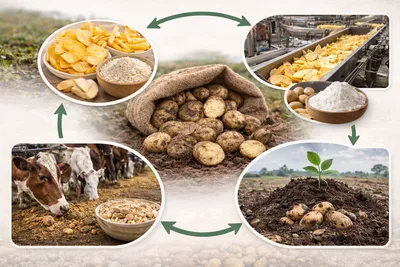
Every potato season in India, a significant portion of produce is classified as "rejected" or low-grade due to size, shape, damage, or cosmetic defects. While these potatoes may not fetch good prices in fresh markets, they still hold substantial economic value when used strategically. Rejected potatoes typically include: Undersized or oversized tubers. Cut, bruised, or deformed potatoes. Sprouted or slightly damaged stock. Surplus produce during peak arrivals. Instead of selling these at distress prices or discarding them, farmers and traders can explore multiple value-creation avenues.
1. Processing into Value-Added Products Low-grade potatoes are widely used in the processing industry for: Potato chips and wafers. French fries and frozen products. Potato flakes and powder. Processing companies often procure such potatoes at lower rates but in bulk. For farmers, this provides an assured market even for non-table-grade produce. 2. Animal Feed and Starch Use Rejected potatoes can be used as: Cattle and poultry feed (after proper handling). Raw material for starch extraction units. Potato starch is used in the food processing, textile, and paper industries, creating an alternative revenue stream.
3. Alcohol and Ethanol Production Potatoes contain high starch content, making them suitable for: Alcohol production (distilleries). Bio-ethanol manufacturing. Some regions in India and globally are increasingly using surplus or rejected potatoes for ethanol blending, which can create long-term demand stability. 4. Local Processing & Small-Scale Businesses Farmers and traders can also explore small-scale processing units, such as: Homemade chips or wafers. Local snack production. Street food supply chains. This helps capture higher margins compared to selling raw potatoes. 5. Cold Storage Strategy for Partial Recovery In some cases, slightly damaged potatoes can be stored and sorted later, especially if market conditions improve. Proper grading and timely marketing can help recover part of the value.
6. Composting and Organic Use Completely unusable potatoes can be converted into: Organic compost. Bio-fertilizers. While this may not generate direct income, it reduces waste and supports soil health. Why This Matters Today With increasing production and frequent price fluctuations, managing rejected produce effectively has become crucial. Turning waste into value not only improves farmer income but also strengthens the overall efficiency of the potato supply chain. PB MARKET INSIGHT With rising demand for processed foods and ethanol, low-grade potatoes are gradually becoming a secondary market segment, offering stable demand beyond fresh consumption markets.
QUICK FACTS Applicable to: Farmers, traders, processors, and cold storage owners. Waste types: Small, damaged, sprouted, and surplus potatoes. Income sources: Processing, animal feed, ethanol, local businesses, and starch extraction. Relevance: High during peak harvest and price crash periods.