Four New Potato Varieties: What Farmers and Processors Should Know
The Ministry of Agriculture and Farmers Welfare has notified four potato varieties developed by the Indian Council of Agricultural Research–Central Potato Research Institute (ICAR-CPRI), Shimla, for seed production and multiplication across India.
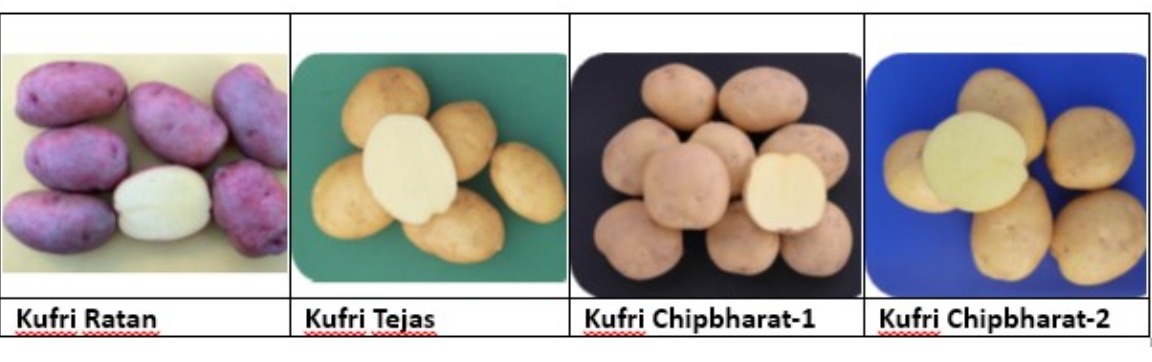
The varieties are Kufri Ratan, Kufri Tejas, Kufri Chipbharat-1 and Kufri Chipbharat-2. They have different uses: two are designed mainly for fresh consumption, while the other two target the potato chips industry. The varieties offer farmers additional options when selecting seed according to their region, growing conditions and intended market. <Cite refs={["turn472817search0"]}/>
Meet the Four Varieties
| Variety | Main Use | Key Features |
|---|---|---|
| Kufri Ratan | Fresh consumption | Red skin, around 90-day maturity, reported yield potential of 37–39 tonnes/ha and good storage quality |
| Kufri Tejas | Fresh consumption | Heat-tolerant, around 90-day maturity, reported yield potential of 37–40 tonnes/ha; suitable for plains including Gujarat |
| Kufri Chipbharat-1 | Potato chips | Around 100-day maturity, reported yield potential of 35–38 tonnes/ha, high dry matter and low reducing sugars |
| Kufri Chipbharat-2 | Potato chips | Early maturity of around 90 days, reported yield potential of 35–37 tonnes/ha and good storage characteristics |
Note: These are reported yield potentials under suitable conditions, not guaranteed farm yields. Actual performance depends on seed quality, climate, soil, irrigation and crop management. <Cite refs={["turn472817search0"]}/>
Why Do These Varieties Matter?
1. More Options for Farmers
Farmers can consider varieties based on their local climate, soil, crop duration and target buyers. Kufri Tejas is particularly relevant to farmers in Gujarat because ICAR-CPRI lists it as suitable for Indian plains, including Gujarat.
However, farmers should confirm local recommendations and seed availability before choosing a variety for commercial cultivation.
2. Better Alignment with Processing Requirements
Potato chips manufacturers need potatoes with suitable dry matter, sugar levels and frying colour. Kufri Chipbharat-1 and Kufri Chipbharat-2 were developed for chip processing, helping farmers explore opportunities in this segment.
Growing a processing variety does not automatically guarantee a purchase contract. Farmers should confirm the buyer's quality specifications and procurement terms before planting.
3. The Importance of Quality Seed
A variety can perform well only when supported by healthy seed and appropriate crop management. Farmers should purchase seed from reliable, authorised sources and check its health, size, purity and suitability for the planting season.
What This Means for PB Stakeholders
Farmers
- Compare varieties according to their local growing conditions and intended market.
- Check seed availability and regional recommendations before planting.
- Discuss quality requirements with potential buyers before selecting processing varieties.
Seed Suppliers
- Share accurate information about variety characteristics, maturity and recommended regions.
- Help farmers understand the difference between table and processing potatoes.
Traders
- Learn which varieties may be suitable for fresh markets and which are intended for processing.
- Confirm buyer preferences rather than assuming all potato varieties receive the same demand.
Processors
- Evaluate varieties against requirements for dry matter, reducing sugars, frying colour and storage performance.
- Work with growers to align seed selection and quality expectations.
🟢 PB Takeaway
The four notified potato varieties give Indian farmers and processors more options for fresh consumption and potato-chip production. The right choice depends on local suitability, reliable seed availability and the market the farmer plans to serve.
Before planting, farmers should check the recommended growing region, verify seed quality and understand the buyer's requirements.