Market
Smaller European Potato Crop Could Create Export Opportunities for India
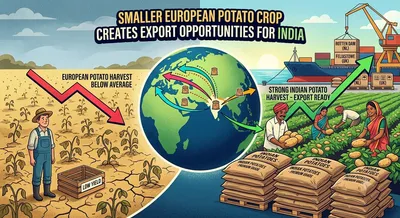
A smaller potato crop in Europe could create new opportunities for Indian exporters, according to a report published by FreshPlaza on 14 October 2026.
The development is relevant as India looks to strengthen its position in international potato markets. However, a smaller European harvest does not automatically mean that European buyers will purchase more potatoes from India. Export opportunities will depend on the type of potato required, product quality, competitive pricing, transport costs and compliance with importing-country requirements.
For Indian suppliers, the opportunity may be worth exploring in both fresh potatoes and processed products, provided they can meet buyers’ specifications and delivery schedules.
What Could Create Opportunities?
- Supply gaps: A smaller European crop may lead some buyers to explore alternative sources, depending on local availability and demand.
- Competitive pricing: Indian exporters will need to compare their landed costs with competing suppliers.
- Quality and consistency: Buyers need potatoes that meet their requirements for size, variety, condition and intended use.
- Export readiness: Reliable packaging, logistics and compliance with phytosanitary and other import rules remain essential.
What This Means for PB Stakeholders
Farmers: Export demand may create opportunities for suitable varieties, but farmers should not change planting or selling decisions based on this report alone.
Traders and exporters: Monitor buyer enquiries, destination-market prices, specifications and freight costs before committing to export orders.
Processors: Assess whether demand for processed potato products offers a more suitable route than exporting fresh potatoes.
Cold-storage owners: Export-oriented supply requires consistent quality and careful stock management; not every stored lot will meet export specifications.
🟢 PB Takeaway
Europe’s smaller potato crop could open a window for Indian suppliers, but converting that possibility into actual exports will depend on price competitiveness, quality and reliable delivery. The next step is to watch for confirmed buyer demand and specific export opportunities rather than assume that a smaller European harvest guarantees higher Indian exports.