Market
12 May 2026
50 views
Source:Team Potatobazaar, MoneyControl
Rising Cold Storage Costs Become Major Concern for India’s Potato Industry
Rising Cold Storage Costs Become Major Concern for India’s Potato Industry
India’s potato industry is facing fresh pressure as rising cold storage operating costs begin affecting storage economics across major potato-producing regions, especially in Uttar Pradesh.
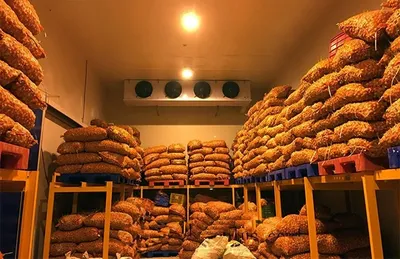
According to recent industry reports, ammonia prices — one of the key refrigerants used in cold storages — have increased sharply in recent weeks, significantly raising operational expenses for cold storage operators. Uttar Pradesh alone has nearly 2,500 cold storages, many of which are heavily dependent on potato storage during the season.
The issue is important because cold storage infrastructure plays a critical role in India’s potato supply chain. A large portion of the country’s potato crop is stored for controlled market release throughout the year, helping balance seasonal supply and price volatility.
Industry participants say the rise in refrigeration costs is adding pressure at a time when:
• electricity expenses remain elevated,
• financing costs are higher,
• and potato market prices in several regions are already under pressure.
Cold storage operators are warning that prolonged cost escalation could eventually affect storage charges for farmers and traders.
At the same time, the broader agri-tech and cold-chain sector continues to expand rapidly in India.
According to industry estimates, India’s cold-chain market is expected to witness strong long-term growth driven by:
• food processing expansion,
• organised retail growth,
• frozen food demand,
• and increasing investment in agricultural infrastructure.
The potato sector remains one of the biggest beneficiaries of this expansion because potatoes account for a major share of cold storage utilisation across northern India.
Globally, potato-processing industries are also investing heavily in advanced storage technologies, including:
• AI-based storage monitoring,
• automated temperature control systems,
• smart humidity management,
• and quality-detection technologies for stored potatoes.
Experts believe future competitiveness in the potato industry will increasingly depend not only on production, but also on efficient storage, energy management, and supply-chain technology.
For India, improving cold storage efficiency may become especially important as the country continues expanding its processing potato sector and frozen fries industry.
According to recent industry reports, ammonia prices — one of the key refrigerants used in cold storages — have increased sharply in recent weeks, significantly raising operational expenses for cold storage operators. Uttar Pradesh alone has nearly 2,500 cold storages, many of which are heavily dependent on potato storage during the season.
The issue is important because cold storage infrastructure plays a critical role in India’s potato supply chain. A large portion of the country’s potato crop is stored for controlled market release throughout the year, helping balance seasonal supply and price volatility.
Industry participants say the rise in refrigeration costs is adding pressure at a time when:
• electricity expenses remain elevated,
• financing costs are higher,
• and potato market prices in several regions are already under pressure.
Cold storage operators are warning that prolonged cost escalation could eventually affect storage charges for farmers and traders.
At the same time, the broader agri-tech and cold-chain sector continues to expand rapidly in India.
According to industry estimates, India’s cold-chain market is expected to witness strong long-term growth driven by:
• food processing expansion,
• organised retail growth,
• frozen food demand,
• and increasing investment in agricultural infrastructure.
The potato sector remains one of the biggest beneficiaries of this expansion because potatoes account for a major share of cold storage utilisation across northern India.
Globally, potato-processing industries are also investing heavily in advanced storage technologies, including:
• AI-based storage monitoring,
• automated temperature control systems,
• smart humidity management,
• and quality-detection technologies for stored potatoes.
Experts believe future competitiveness in the potato industry will increasingly depend not only on production, but also on efficient storage, energy management, and supply-chain technology.
For India, improving cold storage efficiency may become especially important as the country continues expanding its processing potato sector and frozen fries industry.
#ColdStorage#AgriTech#IndiaPotatoMarket