Fertilizer Planning for Potato — Basal to Top Dressing
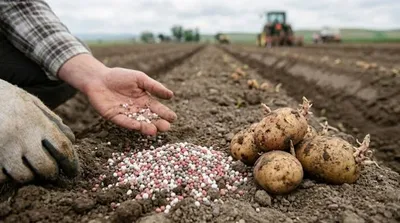
Good fertilizer management is important for strong potato growth, proper tuber development and better yield. But more fertilizer does not always mean more potatoes. The right nutrient, quantity, timing and method are important.
Start With Soil Testing
Before applying fertilizer, farmers should understand the nutrient status of their soil. A soil test can help identify deficiencies and prevent unnecessary fertilizer use.
Potato mainly needs Nitrogen (N), Phosphorus (P) and Potassium (K), along with secondary and micronutrients when required.
1. Basal Fertilizer — Start the Crop Right
Basal fertilizer is applied before planting or at planting. It provides nutrients during the early growth stage.
Phosphorus and potassium are generally important for early root development and crop establishment. Nitrogen may also be included as per the soil test and local recommendation.
Fertilizer should be placed properly so that it is available to the crop without directly damaging the seed tuber.
2. Top Dressing — Support Active Growth
Nitrogen is particularly important during vegetative growth. If the crop needs additional nitrogen, it can be supplied through top dressing at the recommended stage.
However, excessive or late nitrogen application can encourage too much leaf growth and may delay maturity or affect tuber quality.
Always follow the recommended dose for your soil, variety and region rather than applying extra fertilizer.
Fertilizer Planning at a Glance
| Stage | Main Purpose | What to Focus On |
|---|---|---|
| Before planting | Correct soil deficiencies | Soil test & nutrient plan |
| At planting | Early crop establishment | Basal fertilizer |
| Early crop growth | Support healthy plants | Nitrogen as recommended |
| Tuber development | Support tuber growth | Balanced nutrition |
| Late stage | Prepare crop for maturity | Avoid unnecessary nitrogen |
Avoid These Common Mistakes
❌ Applying fertilizer without knowing soil condition
❌ Using more nitrogen because the crop looks weak
❌ Applying fertilizer directly against seed tubers
❌ Ignoring potassium requirements
❌ Giving heavy nitrogen applications too late
❌ Using the same fertilizer plan for every field
Remember: Balance Matters
A good fertilizer programme is not only about NPK. Soil type, previous crop, irrigation, variety, planting date and expected yield all influence nutrient requirements.
Farmers should use soil-test-based recommendations and locally approved fertilizer doses. If fertigation or foliar nutrition is used, follow crop-stage and product recommendations carefully.
PB Takeaway
Plan fertilizer before planting, use basal nutrients correctly, and give top dressing only when the crop needs it. Balanced nutrition can support healthy growth and better tuber development while reducing unnecessary fertilizer cost.