Supply Chain (Post Harvest Storage & Logistics)
Sell Now or Store for Later? How Potato Farmers Can Make the Right Decision
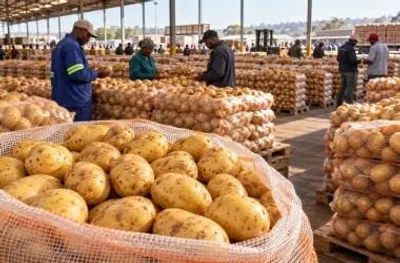
When potato prices are low, many farmers consider storing their produce and selling it later at a better rate. But a higher future price does not always mean a higher profit. Storage rent, transport, quality loss and market uncertainty can reduce the final return.
Before deciding, farmers should compare the money they can earn today with the likely net return after storage.
1. Start With Today's Selling Price
First, find out the current price for your potato variety and quality in the nearby mandi. Then calculate how much money you will receive after commission, loading, transport and other applicable charges.
Do not compare a future market price with today's price alone. Compare the amount you can actually keep.
2. Calculate the Cost of Storage
Before booking cold storage, ask for the complete cost—not just the storage rent.
| Cost or factor | What to check |
|---|---|
| Storage charges | Total rent for the expected period |
| Transport | Cost of taking potatoes to and from storage |
| Loading and unloading | Handling and labour charges |
| Quality loss | Possible weight loss, spoilage or rejection |
| Market risk | Prices may fall instead of rising |
Also confirm the storage conditions suitable for your potato variety and intended market.
3. Understand Your Break-Even Price
Your break-even price is the future selling price you need to cover today's forgone sale value and the additional costs of storage.
Example — illustrative figures only:
Suppose you can sell potatoes today for ₹1,000 per quintal. If storage, transport and other additional costs total ₹150 per quintal, you would need a future selling price above ₹1,150 per quintal to improve your return, assuming no quality or quantity loss.
If losses occur, the required selling price will be even higher.
4. When Might Storage Make Sense?
Storage may be worth considering when:
- The potatoes are suitable for storage and have good keeping quality.
- You have checked the total costs and expected selling period.
- There is a reasonable basis for expecting future demand or better prices.
- You can manage the financial wait without urgent cash needs.
Selling immediately may be better when prices are reasonable, storage costs are high, quality is uncertain or you need cash for the next crop.
5. Check Before You Decide
Before committing your crop, compare current mandi prices, discuss storage terms with the operator, and check buyer demand. Avoid making the decision only because other farmers are storing their potatoes or because prices are expected to rise.
PB Takeaway
Storage is a business decision, not a guarantee of higher profit. Compare today's net return with the expected future return after all costs and possible losses.
Use Potato Bazaar to explore potato-market updates, buying and selling opportunities, and connections that can help you make a more informed decision.