Market
30 March 2026
70 views
Source:Team Potato Bazaar
Azadpur Mandi Market Update: March 30, 2026
Azadpur Mandi Market Update: March 30, 2026
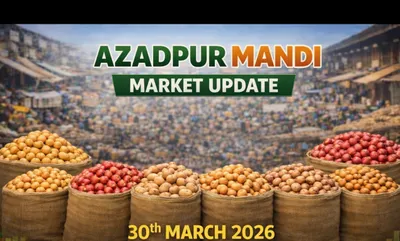
Azadpur Mandi Market Update: Prices Slump by ₹50 as Post-Festival Demand Wanes (March 30, 2026)
The potato market at Azadpur Delhi Mandi is facing a period of heavy correction as the high-demand Navratri season concludes. A combination of excessive supply, rising temperatures, and unexpected logistical hurdles has led to a significant price drop, leaving both farmers and traders in a defensive position.
Supply Surplus and Market Arrivals
The Mandi recorded a substantial influx of produce today, with total arrivals estimated between 125 and 135 trucks. However, the real challenge lies in the "backlog"—a heavy carryover of approximately 20,000 sacks (roughly 32–35 trucks) from previous days remains unsold.
Breakdown by Variety:
Chipsona: ~36–37 trucks
LR (Lady Rosetta): ~18–19 trucks
Pukhraj (Sambhal): ~12–13 truck
Surya: ~10–12 trucks
Punjab (Diamond/Jyoti): ~6–7 trucks
Pricing Trends: The ₹50 Drop
Following the end of the Navratri festival, the market witnessed a sharp price correction. Average rates have fallen by approximately ₹50 per sack due to the sudden cooling of demand.
Current Rates (Per 50kg Bag):
Surya: Ranges widely from ₹300 to ₹550, maintaining its status as the premium variety despite the slump.
Chipsona: Trading between ₹250 and ₹350.
LR (Lady Rosetta): Holding steady at ₹250 to ₹350.
Punjab Varieties: Seeing the most volatility, ranging from ₹170 to ₹350.
Critical Challenges: Heat and "Hidden" Costs
The transition into warmer weather is proving disastrous for crop quality.
• Spoilage & Damage: Rising temperatures and mechanical damage from harvesting "diggers" have resulted in many arrivals being daagi (stained or bruised). Once these potatoes are exposed to the Mandi air, they deteriorate rapidly, forcing quick sales at lower prices.
• The Sorting Burden: Handling damaged stock is not just a logistical headache but a financial one. Traders report that sorting and re-bagging damaged potatoes adds an extra ₹20–₹30 per sack in labor and material costs.
•The LPG Factor: An unexpected shortage of cooking gas (LPG) cylinders has hit local restaurants and community feasts (bhandaras). This logistical bottleneck has indirectly reduced bulk potato consumption, further softening the market.
Strategic Advice for Farmers and Sellers
Market experts and commission agents (aaratis) are issuing a strong "caution" to growers in the current climate:
• Regulate Arrivals: Sellers are urged to halt "blind" shipments. Only send as much produce as the market can absorb immediately to avoid further price crashes and stock spoilage.
• Coordinate with Agents: Before dispatching loads, farmers should communicate directly with their agents to gauge real-time demand and quality requirements.
• Prioritize Quality: Given the ₹150–₹200 price gap between premium and low-quality stock, ensuring only the best grade reaches the Mandi is essential to recouping costs.
The potato market at Azadpur Delhi Mandi is facing a period of heavy correction as the high-demand Navratri season concludes. A combination of excessive supply, rising temperatures, and unexpected logistical hurdles has led to a significant price drop, leaving both farmers and traders in a defensive position.
Supply Surplus and Market Arrivals
The Mandi recorded a substantial influx of produce today, with total arrivals estimated between 125 and 135 trucks. However, the real challenge lies in the "backlog"—a heavy carryover of approximately 20,000 sacks (roughly 32–35 trucks) from previous days remains unsold.
Breakdown by Variety:
Chipsona: ~36–37 trucks
LR (Lady Rosetta): ~18–19 trucks
Pukhraj (Sambhal): ~12–13 truck
Surya: ~10–12 trucks
Punjab (Diamond/Jyoti): ~6–7 trucks
Pricing Trends: The ₹50 Drop
Following the end of the Navratri festival, the market witnessed a sharp price correction. Average rates have fallen by approximately ₹50 per sack due to the sudden cooling of demand.
Current Rates (Per 50kg Bag):
Surya: Ranges widely from ₹300 to ₹550, maintaining its status as the premium variety despite the slump.
Chipsona: Trading between ₹250 and ₹350.
LR (Lady Rosetta): Holding steady at ₹250 to ₹350.
Punjab Varieties: Seeing the most volatility, ranging from ₹170 to ₹350.
Critical Challenges: Heat and "Hidden" Costs
The transition into warmer weather is proving disastrous for crop quality.
• Spoilage & Damage: Rising temperatures and mechanical damage from harvesting "diggers" have resulted in many arrivals being daagi (stained or bruised). Once these potatoes are exposed to the Mandi air, they deteriorate rapidly, forcing quick sales at lower prices.
• The Sorting Burden: Handling damaged stock is not just a logistical headache but a financial one. Traders report that sorting and re-bagging damaged potatoes adds an extra ₹20–₹30 per sack in labor and material costs.
•The LPG Factor: An unexpected shortage of cooking gas (LPG) cylinders has hit local restaurants and community feasts (bhandaras). This logistical bottleneck has indirectly reduced bulk potato consumption, further softening the market.
Strategic Advice for Farmers and Sellers
Market experts and commission agents (aaratis) are issuing a strong "caution" to growers in the current climate:
• Regulate Arrivals: Sellers are urged to halt "blind" shipments. Only send as much produce as the market can absorb immediately to avoid further price crashes and stock spoilage.
• Coordinate with Agents: Before dispatching loads, farmers should communicate directly with their agents to gauge real-time demand and quality requirements.
• Prioritize Quality: Given the ₹150–₹200 price gap between premium and low-quality stock, ensuring only the best grade reaches the Mandi is essential to recouping costs.
#potato prices#Azadpur Mandi