
Market
29 January 2026
35 views
Source:Team Potatobazaar, TOI, Amar Ujala
Heavy harvests and rising cold storage inflows amid weak mandi demand are pressuring potato prices.
Heavy harvests and rising cold storage inflows amid weak mandi demand are pressuring potato prices.
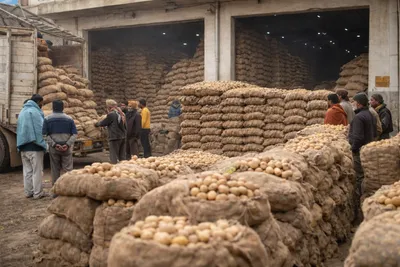
Uttar Pradesh — Latest (January 2026): Potato markets across major producing regions are witnessing intensifying supply pressure, as strong harvest volumes push cold storages toward full capacity while wholesale prices remain under strain. The situation reflects a broader seasonal pattern where high production, synchronized harvesting and storage bottlenecks converge, affecting farmer realisations.
In Mainpuri district, one of the state’s key potato hubs, local reports indicate that this season’s plentiful production has led to rapid filling of cold storage facilities. Harvesting began earlier than usual due to timely sowing and favourable crop conditions, resulting in heavy arrivals at mandis and accelerated storage bookings. Cold storage operators expect most facilities to reach capacity well before the peak storage window.
According to industry estimates, potato output in the district is around 20% higher than normal, with over 60 lakh quintals likely to be stored this season. Storage charges are expected to rise to about ₹280 per quintal, up from last year, driven by higher electricity, labour and handling costs. While storage is being used to manage volumes, many farmers are simultaneously facing declining mandi prices, limiting their ability to recover costs.
Traders report that price pressure has increased as fresh arrivals coincide with the gradual release of older stocks, weakening market sentiment. Similar conditions are being reported from other potato-producing areas, suggesting that the issue extends beyond a single district. Market analysts point out that oversupply combined with limited absorption capacity continues to weigh on prices during peak harvest periods.
Farmers have expressed concern that rising storage costs, when paired with weak market rates, could further compress margins. Cold storage operators, meanwhile, are exploring efficiency measures such as mechanised loading and early-booking incentives to manage the inflow, though growers remain cautious about near-term price recovery.
Agriculture officials note that the current situation underlines the need for better harvest planning, storage coordination and demand linkage, especially during high-production years.
QUICK FACTS
- Location: Uttar Pradesh (including Mainpuri district)
- Stakeholders affected: Farmers, cold storage operators, traders, commission agents
- Immediate impact: Near-full cold storages; weak mandi prices
In Mainpuri district, one of the state’s key potato hubs, local reports indicate that this season’s plentiful production has led to rapid filling of cold storage facilities. Harvesting began earlier than usual due to timely sowing and favourable crop conditions, resulting in heavy arrivals at mandis and accelerated storage bookings. Cold storage operators expect most facilities to reach capacity well before the peak storage window.
According to industry estimates, potato output in the district is around 20% higher than normal, with over 60 lakh quintals likely to be stored this season. Storage charges are expected to rise to about ₹280 per quintal, up from last year, driven by higher electricity, labour and handling costs. While storage is being used to manage volumes, many farmers are simultaneously facing declining mandi prices, limiting their ability to recover costs.
Traders report that price pressure has increased as fresh arrivals coincide with the gradual release of older stocks, weakening market sentiment. Similar conditions are being reported from other potato-producing areas, suggesting that the issue extends beyond a single district. Market analysts point out that oversupply combined with limited absorption capacity continues to weigh on prices during peak harvest periods.
Farmers have expressed concern that rising storage costs, when paired with weak market rates, could further compress margins. Cold storage operators, meanwhile, are exploring efficiency measures such as mechanised loading and early-booking incentives to manage the inflow, though growers remain cautious about near-term price recovery.
Agriculture officials note that the current situation underlines the need for better harvest planning, storage coordination and demand linkage, especially during high-production years.
QUICK FACTS
- Location: Uttar Pradesh (including Mainpuri district)
- Stakeholders affected: Farmers, cold storage operators, traders, commission agents
- Immediate impact: Near-full cold storages; weak mandi prices
#ColdStorage #MarketSlump#oversupply