
Weather
26 January 2026
106 views
Source:Team Potato Bazaar
Winter Rains Break Dry Spell, Sparking Blight Alert for Potato Growers
Winter Rains Break Dry Spell, Sparking Blight Alert for Potato Growers
Winter Rains Break Dry Spell, Sparking Blight Alert for Potato Growers
The arrival of the season’s first major rainfall has delivered a long-awaited moisture boost to India’s northern plains, effectively breaking a critical 90% rainfall deficit that defined early January. While the showers are a "boon" for the wheat crop, they have introduced severe operational and pathological risks for potato farmers in Punjab, Haryana, and Uttar Pradesh.
The precipitation, triggered by an intense Western Disturbance, has forced a suspension of ongoing potato harvests. With field humidity levels spiking and temperatures lingering between 10°C and 18°C, agricultural experts from Punjab Agricultural University (PAU) and CSA University, Kanpur, have issued urgent advisories regarding Late Blight (Phytophthora infestans).
These moist, cool conditions are ideal for the fungus, which can devastate standing crops within days if preventive fungicides are not applied.
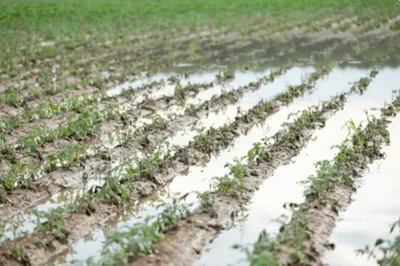
Beyond disease, the "breaking of the dry spell" has created a logistical bottleneck. In districts like Patiala and Jalandhar, farmers struggle to drain waterlogged fields to prevent tuber rot.
Market volatility adds to the stress; a surplus from last year's cold storage has already suppressed local prices to roughly ₹6/kg, leaving growers vulnerable as they face potential yield losses of up to 25–40% in rain-fed regions.
While the rain is a relief for the parched earth, the timing creates a bit of a "double-edged sword" scenario specifically for potato tubers.
The immediate focus shifts from irrigation to drainage and disease management.
Critical Actions for Potato Farmers Post-Rain
Evacuate Standing Water:
1. Potatoes are highly sensitive to "wet feet." Ensure water is drained within 12–24 hours to prevent tuber rot (soft rot) caused by anaerobic conditions.
2. The 48-Hour Blight Window: Late Blight spores can germinate in as little as 2 to 3 hours of leaf wetness. If the sky remains overcast and humidity stays above 80%, the risk is at its peak.
3.Preventive Spraying: Once the rain stops and leaves are slightly dry, applying a contact fungicide like Mancozeb is often recommended by experts to create a protective shield before the fungus takes hold.
The arrival of the season’s first major rainfall has delivered a long-awaited moisture boost to India’s northern plains, effectively breaking a critical 90% rainfall deficit that defined early January. While the showers are a "boon" for the wheat crop, they have introduced severe operational and pathological risks for potato farmers in Punjab, Haryana, and Uttar Pradesh.
The precipitation, triggered by an intense Western Disturbance, has forced a suspension of ongoing potato harvests. With field humidity levels spiking and temperatures lingering between 10°C and 18°C, agricultural experts from Punjab Agricultural University (PAU) and CSA University, Kanpur, have issued urgent advisories regarding Late Blight (Phytophthora infestans).
These moist, cool conditions are ideal for the fungus, which can devastate standing crops within days if preventive fungicides are not applied.
Beyond disease, the "breaking of the dry spell" has created a logistical bottleneck. In districts like Patiala and Jalandhar, farmers struggle to drain waterlogged fields to prevent tuber rot.
Market volatility adds to the stress; a surplus from last year's cold storage has already suppressed local prices to roughly ₹6/kg, leaving growers vulnerable as they face potential yield losses of up to 25–40% in rain-fed regions.
While the rain is a relief for the parched earth, the timing creates a bit of a "double-edged sword" scenario specifically for potato tubers.
The immediate focus shifts from irrigation to drainage and disease management.
Critical Actions for Potato Farmers Post-Rain
Evacuate Standing Water:
1. Potatoes are highly sensitive to "wet feet." Ensure water is drained within 12–24 hours to prevent tuber rot (soft rot) caused by anaerobic conditions.
2. The 48-Hour Blight Window: Late Blight spores can germinate in as little as 2 to 3 hours of leaf wetness. If the sky remains overcast and humidity stays above 80%, the risk is at its peak.
3.Preventive Spraying: Once the rain stops and leaves are slightly dry, applying a contact fungicide like Mancozeb is often recommended by experts to create a protective shield before the fungus takes hold.
#AgricultureNews#ClimateImpact#IndianFarmers#PotatoFarming