Agriculture
17 December 2025
14 views
Source:Indian Express/Team Potato Bazaar
Cuttack farmers reluctant to grow potatoes despite subsidies; cite cold storage shortage
Cuttack farmers reluctant to grow potatoes despite subsidies; cite cold storage shortage
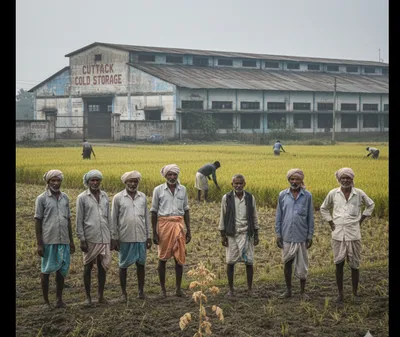
Cuttack Farmers Bypass Potato Subsidies as Cold Storage Crisis Persists
Despite aggressive state government incentives and heavy seed subsidies, uncertainty surrounds the potato cultivation targets in Cuttack district.
Farmers are increasingly reluctant to plant the tuber crop, citing a decades-old lack of cold storage infrastructure and shifting weather patterns.
A Decline from Former Glory
Cuttack was once the leader of Odisha’s potato production. In 2012-13, the district contributed nearly 23% of the state's total output, with 2,910 hectares under cultivation. Today, that footprint has shrunken drastically. Last year, the district failed to meet even a modest target of 575 hectares, managing only 438 hectares.
For the current season, the Horticulture Directorate has set a target of 800 acres, but local interest remains lukewarm.
The Storage & Timing Deadlock
The primary deterrent is the lack of preservation facilities. Farmers in Salepur, Banki, and Niali blocks report that government-run cold stores have been lying defunct for decades.
"Without storage, we are forced to sell our harvest at throwaway prices immediately after the season," explained a local farmer.
Logistical delays are also playing a role. Potato sowing typically begins in late November following the Kharif paddy harvest. However, delayed paddy sowing this year means many fields are still occupied. Farmers fear that late planting will push the "tuberization" phase—which requires low temperatures—into the warmer weeks of late February, ruining the yield.
Government Incentives vs. Ground Reality
To encourage participation, the Horticulture Department is offering significant financial relief:
Subsidized Seeds: High-yielding seeds purchased by the state at ₹42.27/kg are being sold to farmers for ₹20/kg.
Direct Benefit Transfer: An additional ₹10/kg refund is available to farmers who submit GPS-tagged photos of their cultivated land.
Deputy Director of Horticulture, Sandul Rama Rao, confirmed that seed distribution is underway. However, for most farmers, the promise of cheap seeds cannot outweigh the risk of crop loss due to heat or market exploitation in the absence of cold storage.
Despite aggressive state government incentives and heavy seed subsidies, uncertainty surrounds the potato cultivation targets in Cuttack district.
Farmers are increasingly reluctant to plant the tuber crop, citing a decades-old lack of cold storage infrastructure and shifting weather patterns.
A Decline from Former Glory
Cuttack was once the leader of Odisha’s potato production. In 2012-13, the district contributed nearly 23% of the state's total output, with 2,910 hectares under cultivation. Today, that footprint has shrunken drastically. Last year, the district failed to meet even a modest target of 575 hectares, managing only 438 hectares.
For the current season, the Horticulture Directorate has set a target of 800 acres, but local interest remains lukewarm.
The Storage & Timing Deadlock
The primary deterrent is the lack of preservation facilities. Farmers in Salepur, Banki, and Niali blocks report that government-run cold stores have been lying defunct for decades.
"Without storage, we are forced to sell our harvest at throwaway prices immediately after the season," explained a local farmer.
Logistical delays are also playing a role. Potato sowing typically begins in late November following the Kharif paddy harvest. However, delayed paddy sowing this year means many fields are still occupied. Farmers fear that late planting will push the "tuberization" phase—which requires low temperatures—into the warmer weeks of late February, ruining the yield.
Government Incentives vs. Ground Reality
To encourage participation, the Horticulture Department is offering significant financial relief:
Subsidized Seeds: High-yielding seeds purchased by the state at ₹42.27/kg are being sold to farmers for ₹20/kg.
Direct Benefit Transfer: An additional ₹10/kg refund is available to farmers who submit GPS-tagged photos of their cultivated land.
Deputy Director of Horticulture, Sandul Rama Rao, confirmed that seed distribution is underway. However, for most farmers, the promise of cheap seeds cannot outweigh the risk of crop loss due to heat or market exploitation in the absence of cold storage.
Potato agriculture orissa