Potato: A Nutrient-Dense Superfood Hiding in Plain Sight
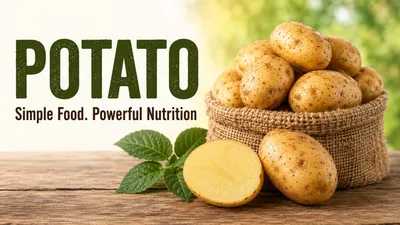
For decades, potatoes have often been unfairly labelled as "just carbohydrates." In reality, a plain potato is one of nature's most nutrient-dense vegetables, providing energy, essential vitamins, minerals, fibre and high-quality plant protein—all at just 110 calories per medium potato (148 g). When prepared in healthy ways such as boiling, baking or steaming, potatoes can be an important part of a balanced diet.
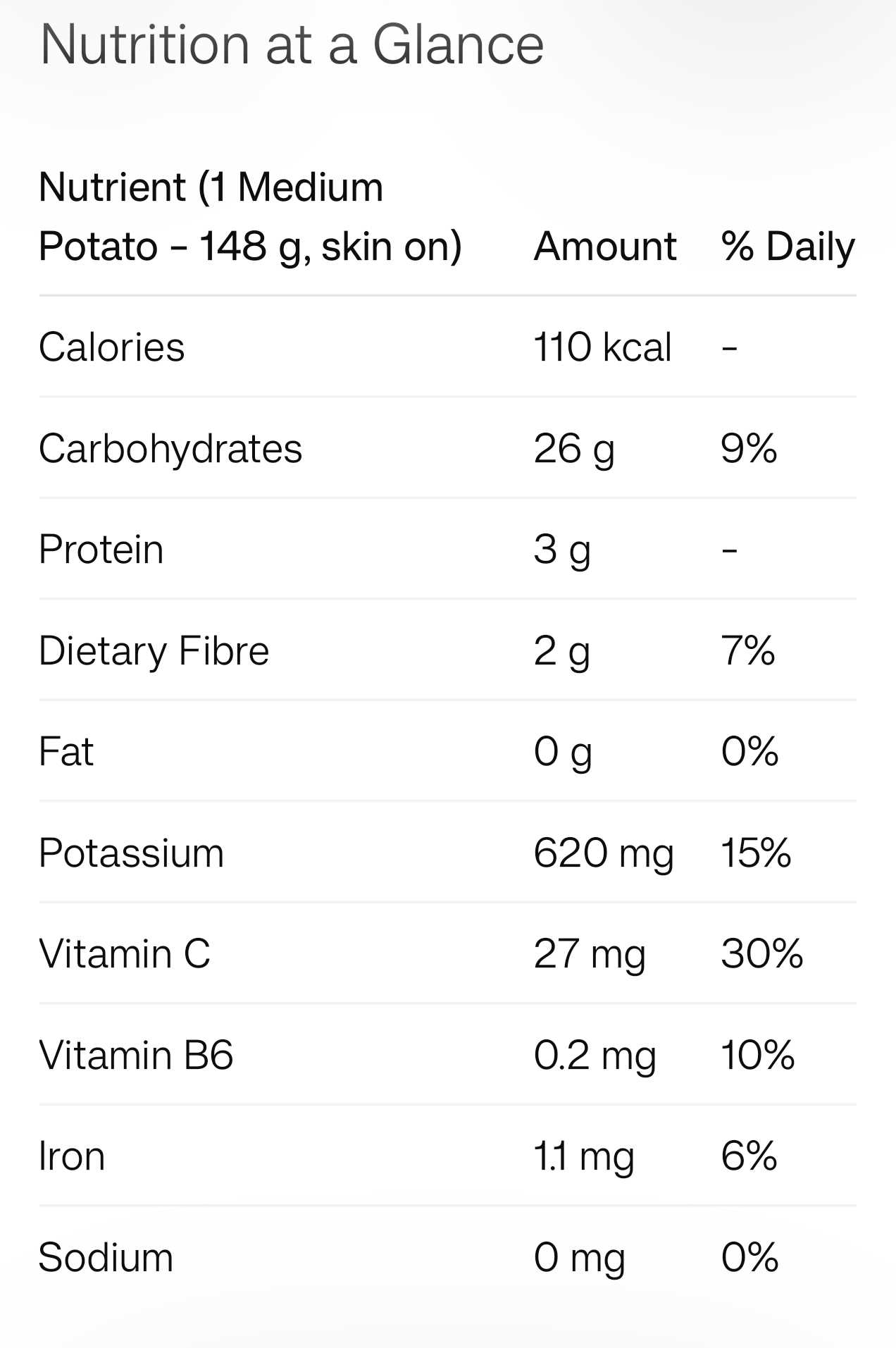
*Based on a 2,000-calorie diet
Why Potatoes Deserve a Place on Your Plate
1. Excellent Source of Potassium
Potatoes contain around 620 mg of potassium, significantly more than a medium banana (about 420 mg). Potassium helps regulate blood pressure, supports muscle function and maintains healthy nerve signalling.
2. Rich in Vitamin C
A medium potato provides nearly one-third of an adult's daily Vitamin C requirement. Besides supporting immunity, Vitamin C aids collagen formation, wound healing and improves iron absorption. Cooking potatoes with their skin helps retain more Vitamin C.
3. Provides Quality Energy
The carbohydrate in potatoes is primarily complex starch, making them an excellent source of sustained energy for farmers, labourers, athletes and active individuals. Unlike refined carbohydrates, potatoes also contribute fibre, vitamins and minerals.
4. Naturally Fat-Free and Gluten-Free
Plain potatoes contain:
- No cholesterol
- No saturated fat
- No sodium
- No gluten
This makes them suitable for many healthy eating patterns, provided excessive oil, butter or salt is avoided.
Resistant Starch: A Hidden Health Benefit
One of the lesser-known nutritional advantages of potatoes is resistant starch.
When cooked potatoes are cooled (such as in potato salad or refrigerated boiled potatoes), part of their starch converts into resistant starch. This behaves similarly to dietary fibre and may:
- Improve gut health
- Feed beneficial intestinal bacteria
- Increase satiety
- Support better blood sugar control
- Improve insulin sensitivity
Research indicates cooked-and-cooled potatoes contain more resistant starch than freshly cooked potatoes.
More Than Just Carbohydrates
Key nutrients in one medium potato
Approximate % Daily Value provided by a medium skin-on potato.
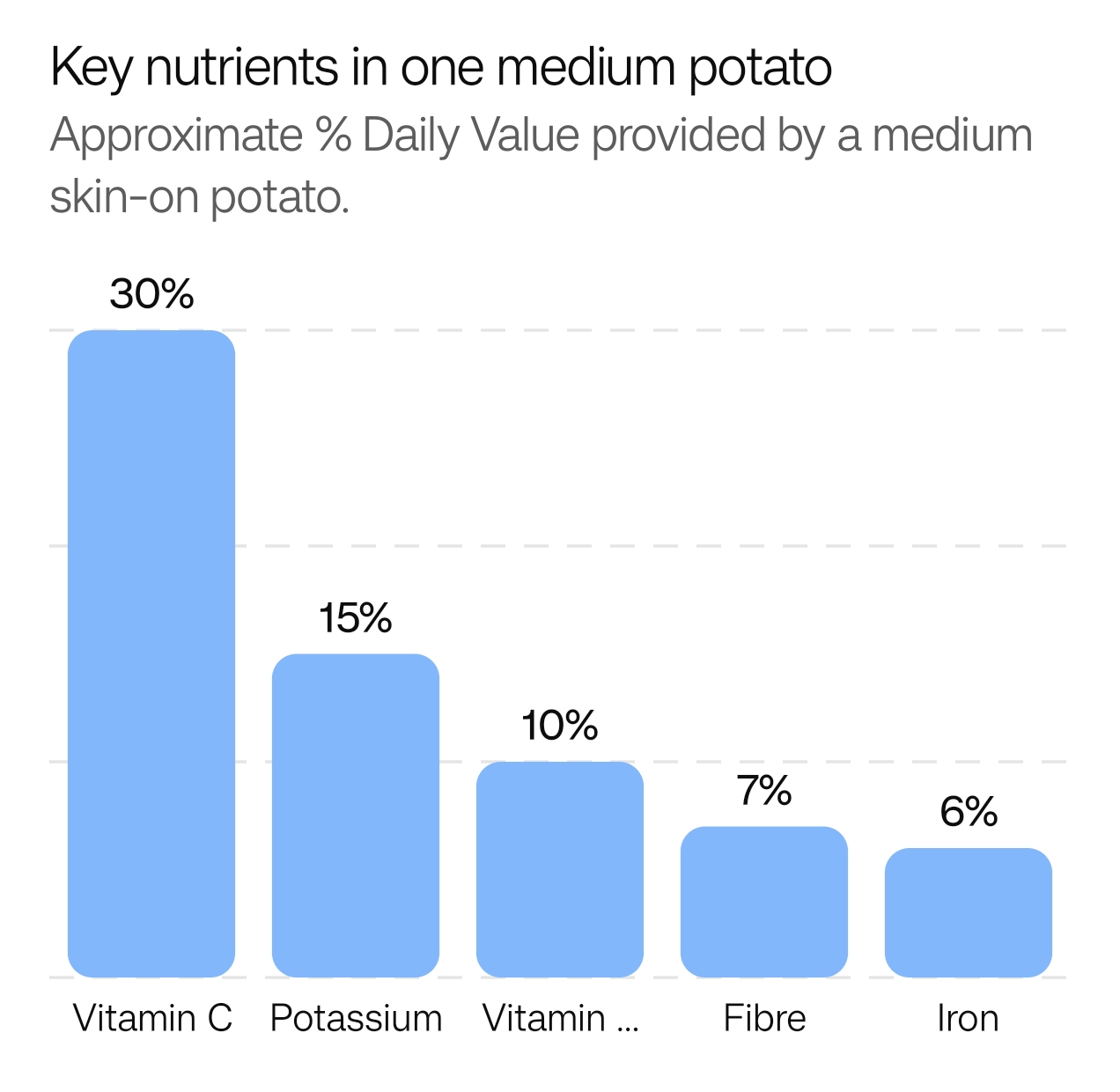
Beyond carbohydrates, potatoes contribute several important nutrients:
- Vitamin B6 supports brain development and protein metabolism.
- Iron helps transport oxygen throughout the body.
- Fibre supports digestive health and promotes fullness.
- Plant protein contains a high-quality amino acid profile compared with many vegetables.
Colour Matters
Different potato varieties provide additional health-promoting compounds:
- Purple potatoes are rich in anthocyanins, natural antioxidants.
- Yellow potatoes contain carotenoids.
- Red potatoes provide flavonoids and other beneficial phytochemicals.
- These antioxidants help protect cells from oxidative stress and support long-term health.
Healthy Ways to Enjoy Potatoes
The health value of potatoes depends greatly on how they are prepared.
Best choices:
- Boiled
- Steamed
- Baked
- Air-fried
- Roasted with minimal oil
Limit
- Deep-fried French fries
- Potato chips
- Heavy cream- or butter-based preparations
The potato itself is highly nutritious—the extra fat, salt and processing are what reduce its healthfulness.
The Bottom Line
Potatoes are far more than a source of starch. They are an affordable, widely available and nutrient-rich vegetable that provides energy, potassium, Vitamin C, fibre and quality plant protein while being naturally fat-free, gluten-free and sodium-free. Including potatoes as part of a balanced diet—especially when cooked in healthy ways—can help people meet their daily vegetable and nutrient requirements.
For farmers, consumers and the potato industry alike, the message is clear: potatoes are not just a staple food—they are a nutritional powerhouse.