Market
19 June 2026
24 views
Source:Team Potatobazaar
Potato Industry Faces Continued Pressure from Weak Prices and Slow Stock Movement
Potato Industry Faces Continued Pressure from Weak Prices and Slow Stock Movement
Low Potato Prices Continue to Worry Farmers
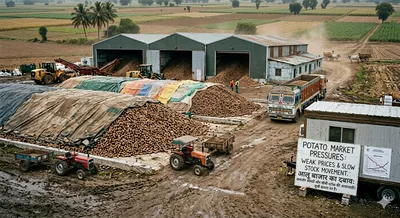
The potato sector continues to face challenges as market prices remain under pressure across several producing regions. According to industry discussions, current rates in many markets are struggling to cover the combined costs of cultivation, cold storage, transportation and handling.
Farmer groups and trade representatives have expressed concern that prolonged weak prices could impact grower confidence ahead of the next planting season. Market participants believe that unless demand improves or stocks reduce significantly, profitability may remain limited for a large section of potato growers.
Slow Stock Movement Raises Concerns for Cold Storages
Cold storage operators and traders are closely monitoring inventory levels as stock movement remains slower than expected in several regions.
Industry stakeholders reported that delayed liquidation of stored potatoes is increasing financial pressure across the supply chain. Extended storage periods not only increase carrying costs but also raise the risk of quality deterioration.
Market experts suggest that regular and disciplined stock releases will be important to avoid excess market pressure during the coming months.
Quality-Based Trading Dominates Potato Markets
Potato markets continue to operate on a strict quality-based trend, with buyers showing a clear preference for clean, graded and storage-stable potatoes.
Traders reported that premium-quality stock is attracting relatively better demand and prices, while lower-grade potatoes continue to face limited buyer interest. The gap between high-quality and average-quality potatoes has widened in recent weeks, highlighting the growing importance of grading and post-harvest management.
Industry participants believe quality will remain one of the most important factors influencing potato prices during the storage season.
Weather Conditions Remain a Key Market Factor
Weather continues to be closely monitored by potato stakeholders as several regions experience changing temperature and rainfall patterns.
While current market supplies are primarily coming from cold storages, weather conditions can influence transportation, storage management and planning for the upcoming potato crop. Market participants are particularly watching monsoon progress, which will play an important role in shaping agricultural sentiment and future planting decisions.
Industry Calls for Better Supply Chain Coordination
Leaders from across the potato value chain have highlighted the need for stronger coordination among farmers, traders, cold storages and market organisations.
Industry representatives believe that better planning of storage releases, arrivals and marketing strategies can help improve price stability and reduce unnecessary market volatility. Stakeholders stressed that collaboration across the sector will be critical for maintaining sustainable growth and strengthening the potato economy in the long term.
PB View
The potato industry is currently navigating a challenging phase marked by weak prices, slow stock movement and cautious buying activity. Farmers are facing pressure on profitability, while traders and cold storages continue to manage inventory-related challenges. As the market enters the monsoon period, quality management, disciplined stock releases and demand recovery will remain key factors influencing the direction of the potato trade.
The potato sector continues to face challenges as market prices remain under pressure across several producing regions. According to industry discussions, current rates in many markets are struggling to cover the combined costs of cultivation, cold storage, transportation and handling.
Farmer groups and trade representatives have expressed concern that prolonged weak prices could impact grower confidence ahead of the next planting season. Market participants believe that unless demand improves or stocks reduce significantly, profitability may remain limited for a large section of potato growers.
Slow Stock Movement Raises Concerns for Cold Storages
Cold storage operators and traders are closely monitoring inventory levels as stock movement remains slower than expected in several regions.
Industry stakeholders reported that delayed liquidation of stored potatoes is increasing financial pressure across the supply chain. Extended storage periods not only increase carrying costs but also raise the risk of quality deterioration.
Market experts suggest that regular and disciplined stock releases will be important to avoid excess market pressure during the coming months.
Quality-Based Trading Dominates Potato Markets
Potato markets continue to operate on a strict quality-based trend, with buyers showing a clear preference for clean, graded and storage-stable potatoes.
Traders reported that premium-quality stock is attracting relatively better demand and prices, while lower-grade potatoes continue to face limited buyer interest. The gap between high-quality and average-quality potatoes has widened in recent weeks, highlighting the growing importance of grading and post-harvest management.
Industry participants believe quality will remain one of the most important factors influencing potato prices during the storage season.
Weather Conditions Remain a Key Market Factor
Weather continues to be closely monitored by potato stakeholders as several regions experience changing temperature and rainfall patterns.
While current market supplies are primarily coming from cold storages, weather conditions can influence transportation, storage management and planning for the upcoming potato crop. Market participants are particularly watching monsoon progress, which will play an important role in shaping agricultural sentiment and future planting decisions.
Industry Calls for Better Supply Chain Coordination
Leaders from across the potato value chain have highlighted the need for stronger coordination among farmers, traders, cold storages and market organisations.
Industry representatives believe that better planning of storage releases, arrivals and marketing strategies can help improve price stability and reduce unnecessary market volatility. Stakeholders stressed that collaboration across the sector will be critical for maintaining sustainable growth and strengthening the potato economy in the long term.
PB View
The potato industry is currently navigating a challenging phase marked by weak prices, slow stock movement and cautious buying activity. Farmers are facing pressure on profitability, while traders and cold storages continue to manage inventory-related challenges. As the market enters the monsoon period, quality management, disciplined stock releases and demand recovery will remain key factors influencing the direction of the potato trade.
#PotatoMarket#FarmEconomics#StorageStocks