Market
18 June 2026
24 views
Source:Team Potatobazaar
Bengal's Record Potato Harvest Raises Questions for India's Potato Market
Bengal's Record Potato Harvest Raises Questions for India's Potato Market
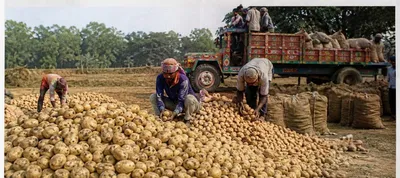
West Bengal, one of India's largest potato-producing states, is witnessing a historic potato harvest in the 2025-26 season. Production is estimated at 140–150 lakh tonnes, nearly 20% higher than last year and the highest output recorded in the last five years. While a bumper crop is generally seen as positive news, this season has created a new challenge for farmers, traders, and cold-storage operators across the state.
The biggest concern is not production—but managing the surplus.
A Harvest Bigger Than the Storage System
West Bengal's cold-storage network can accommodate only about 82 lakh tonnes of potatoes, while total production is expected to exceed 140 lakh tonnes. This means a significant portion of the crop cannot be stored and must either be sold quickly or moved to other markets.
As cold storages continue to fill up, concerns have grown over:
Excess market arrivals
Pressure on potato prices
Increased storage competition
Risk of wastage if stocks are not moved efficiently
For farmers, the challenge is finding buyers before prices weaken further.
Government Removes Interstate Movement Restrictions
To address the growing surplus, the West Bengal government has removed restrictions on interstate movement of potatoes. The decision allows traders and farmers to freely transport potatoes to other states, helping reduce pressure on local markets and improve market access.
The move is expected to:
Improve supply-chain efficiency
Open new markets for Bengal potatoes
Reduce the risk of distress sales
Support better price realization for growers
Industry stakeholders believe unrestricted movement will be critical in managing this year's record crop.
What Does This Mean for Potato Prices?
The impact of the bumper crop will be closely watched across India's potato belt.
If interstate demand absorbs the surplus efficiently, the market may remain stable. However, if large quantities continue to remain within the state, potato prices could face prolonged pressure during the storage season.
Traders are also monitoring:
Cold-storage loading levels
Demand from major consuming states
Movement to eastern and southern markets
Future stock positions after the storage season
The next few months will play a crucial role in determining how the market responds to this unprecedented harvest.
What Farmers and Traders Should Watch
Key indicators to monitor include:
Interstate potato movement volumes
Cold-storage occupancy rates
Demand from major consuming markets
Wholesale market arrivals
Price trends after storage loading is completed
These factors will influence both short-term trading opportunities and long-term market sentiment.
PB Takeaway
West Bengal's record potato harvest is both an opportunity and a challenge. While higher production reflects strong agricultural performance, the sheer volume of potatoes has created a storage and marketing challenge that could influence potato prices across India.
The government's decision to allow unrestricted interstate movement may help ease pressure, but the market's ability to absorb this surplus will determine whether the season becomes a success story or a struggle for farmers and traders.
For now, the Indian potato industry is watching Bengal closely—because what happens there may shape potato market trends across the country for the rest of the year.
The biggest concern is not production—but managing the surplus.
A Harvest Bigger Than the Storage System
West Bengal's cold-storage network can accommodate only about 82 lakh tonnes of potatoes, while total production is expected to exceed 140 lakh tonnes. This means a significant portion of the crop cannot be stored and must either be sold quickly or moved to other markets.
As cold storages continue to fill up, concerns have grown over:
Excess market arrivals
Pressure on potato prices
Increased storage competition
Risk of wastage if stocks are not moved efficiently
For farmers, the challenge is finding buyers before prices weaken further.
Government Removes Interstate Movement Restrictions
To address the growing surplus, the West Bengal government has removed restrictions on interstate movement of potatoes. The decision allows traders and farmers to freely transport potatoes to other states, helping reduce pressure on local markets and improve market access.
The move is expected to:
Improve supply-chain efficiency
Open new markets for Bengal potatoes
Reduce the risk of distress sales
Support better price realization for growers
Industry stakeholders believe unrestricted movement will be critical in managing this year's record crop.
What Does This Mean for Potato Prices?
The impact of the bumper crop will be closely watched across India's potato belt.
If interstate demand absorbs the surplus efficiently, the market may remain stable. However, if large quantities continue to remain within the state, potato prices could face prolonged pressure during the storage season.
Traders are also monitoring:
Cold-storage loading levels
Demand from major consuming states
Movement to eastern and southern markets
Future stock positions after the storage season
The next few months will play a crucial role in determining how the market responds to this unprecedented harvest.
What Farmers and Traders Should Watch
Key indicators to monitor include:
Interstate potato movement volumes
Cold-storage occupancy rates
Demand from major consuming markets
Wholesale market arrivals
Price trends after storage loading is completed
These factors will influence both short-term trading opportunities and long-term market sentiment.
PB Takeaway
West Bengal's record potato harvest is both an opportunity and a challenge. While higher production reflects strong agricultural performance, the sheer volume of potatoes has created a storage and marketing challenge that could influence potato prices across India.
The government's decision to allow unrestricted interstate movement may help ease pressure, but the market's ability to absorb this surplus will determine whether the season becomes a success story or a struggle for farmers and traders.
For now, the Indian potato industry is watching Bengal closely—because what happens there may shape potato market trends across the country for the rest of the year.
#potatobazaar#potatomarket#coldstorage