Market & Trade
New Technology Companies Transforming Potato Farming in India.
13 May 2026
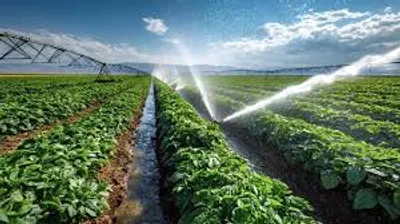
Technology-driven agricultural startups are increasingly transforming the potato farming sector by introducing data-based decision making, precision farming tools, digital advisory systems, and supply-chain connectivity.
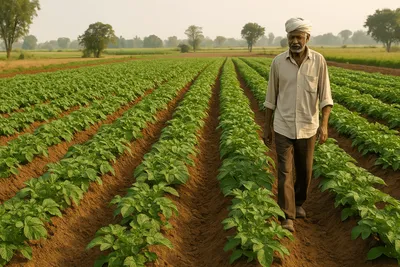
Traditionally, potato farming depended heavily on farmer experience, local weather patterns, and manual monitoring. However, rising input costs, labour shortages, climate uncertainty, and quality-focused market demand are encouraging farmers to adopt smarter farming practices.
Several agri-tech companies are now working on solutions such as:
• satellite-based crop monitoring,
• soil health analytics,
• AI-powered disease detection,
• irrigation automation,
• and digital mandi connectivity.
These technologies are helping farmers improve productivity while reducing unnecessary input usage.
One of the biggest areas of innovation is precision farming. Modern sensor systems can now monitor:
• soil moisture,
• nutrient availability,
• crop stress,
• and disease risks in real time.
This allows farmers to apply water, fertilisers, and crop protection products more efficiently.
Startups are also helping potato growers through digital advisory platforms that provide:
• weather alerts,
• pest management guidance,
• crop-stage recommendations,
• and market price updates.
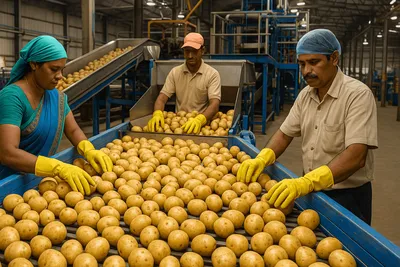
In processing potato cultivation, technology adoption is becoming even more important because processors increasingly demand:
• uniform size,
• consistent dry matter,
• better skin quality,
• and controlled chemical usage.
Agri-tech firms are also supporting traceability systems, allowing buyers and processors to track crop origin and farming practices more efficiently.
Another major area of transformation is farm-to-market connectivity. Digital platforms are reducing dependence on traditional middle-layer communication by directly connecting:
• farmers,
• traders,
• processors,
• cold storages,
• and transporters.
Globally, potato-producing regions in Europe, North America, China, and India are witnessing growing investment in agricultural automation and smart farming systems.
In India, states such as Gujarat, Uttar Pradesh, Punjab, and West Bengal are gradually seeing higher adoption of technology-driven farming practices, especially among progressive farmers and organised potato supply chains.
Industry experts believe the future competitiveness of potato farming will increasingly depend on:
• productivity per acre,
• quality consistency,
• storage efficiency,
• and digital supply-chain integration.
As the potato industry becomes more quality-sensitive and market-linked, agri-startups are expected to play an increasingly important role in improving efficiency across the entire value chain.
Traditionally, potato farming depended heavily on farmer experience, local weather patterns, and manual monitoring. However, rising input costs, labour shortages, climate uncertainty, and quality-focused market demand are encouraging farmers to adopt smarter farming practices.
Several agri-tech companies are now working on solutions such as:
• satellite-based crop monitoring,
• soil health analytics,
• AI-powered disease detection,
• irrigation automation,
• and digital mandi connectivity.
These technologies are helping farmers improve productivity while reducing unnecessary input usage.
One of the biggest areas of innovation is precision farming. Modern sensor systems can now monitor:
• soil moisture,
• nutrient availability,
• crop stress,
• and disease risks in real time.
This allows farmers to apply water, fertilisers, and crop protection products more efficiently.
Startups are also helping potato growers through digital advisory platforms that provide:
• weather alerts,
• pest management guidance,
• crop-stage recommendations,
• and market price updates.
In processing potato cultivation, technology adoption is becoming even more important because processors increasingly demand:
• uniform size,
• consistent dry matter,
• better skin quality,
• and controlled chemical usage.
Agri-tech firms are also supporting traceability systems, allowing buyers and processors to track crop origin and farming practices more efficiently.
Another major area of transformation is farm-to-market connectivity. Digital platforms are reducing dependence on traditional middle-layer communication by directly connecting:
• farmers,
• traders,
• processors,
• cold storages,
• and transporters.
Globally, potato-producing regions in Europe, North America, China, and India are witnessing growing investment in agricultural automation and smart farming systems.
In India, states such as Gujarat, Uttar Pradesh, Punjab, and West Bengal are gradually seeing higher adoption of technology-driven farming practices, especially among progressive farmers and organised potato supply chains.
Industry experts believe the future competitiveness of potato farming will increasingly depend on:
• productivity per acre,
• quality consistency,
• storage efficiency,
• and digital supply-chain integration.
As the potato industry becomes more quality-sensitive and market-linked, agri-startups are expected to play an increasingly important role in improving efficiency across the entire value chain.
Tags
#AgriStartups#PotatoFarming#SmartFarming