Farming (Agronomy)
Potato Farming Guide
7 December 2025
Potato Farming Guide
This guide breaks down the essential steps to growing potatoes successfully in India.
1. Introduction to the Potato Crop
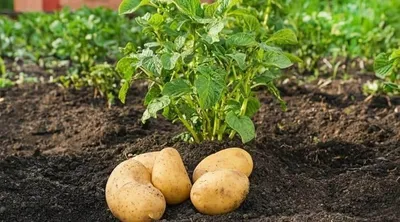
Botanically known as Solanum tuberosum, the potato belongs to the Solanaceae family. While the plant produces flowers and small green fruits resembling cherry tomatoes, the edible part is the underground tuber. These tubers are rich in carbohydrates, making them a global staple. Potato plants are annuals that grow up to 2 feet in height. Interestingly, the fruits and other green parts of the plant contain a toxin called solanine and are not edible; only the tubers are safe for consumption.
2. Ideal Climate and Temperature
Potatoes are a "cool season" crop. They thrive best in cool climates with bright sunshine during the day and cool nights.
Temperature: Temperature plays a massive role in tuber development. The ideal soil temperature for tuber formation is between 17°C and 19°C. If the temperature rises above 30°C, tuber growth stops because the plant consumes its stored carbohydrates through respiration rather than storing them.
Season: In India, potatoes are primarily a Rabi crop, cultivated between October and December when the weather is pleasant—neither too hot nor too cold.
3. Soil and Land Preparation
To get big, healthy potatoes, the soil needs to be loose and airy.
Soil Type: Loamy soil is the best choice. It allows roots to penetrate easily and gives tubers space to expand. Heavy clay soils should be avoided as they stick to the tubers and restrict their growth.
pH Level: The soil should be slightly acidic, with a pH between 4.8 and 5.4. This range encourages carbohydrate storage in the tubers.
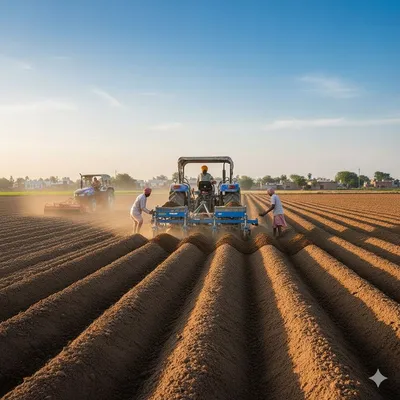
Preparation: The land must be ploughed 2-3 times and harrowed to break up clods. Any hard rocks or pans must be removed, as they interfere with water circulation and root growth. When making beds, keep a distance of 60–90 cm between them.
4. Popular Potato Varieties
India cultivates several commercial varieties, mostly developed to suit different regional climates.
Kufri Sindhuri: Red, round tubers. Matures in 3.5 to 4.5 months. Ideal for North Indian plains.
Kufri Chandramukhi: White, oval tubers. Known for cooking quickly and high yield.
Kufri Jyoti: Resistant to late blight disease and widely adaptable in Central and Southern plains.
Kufri Sheetman: A frost-resistant variety suitable for North Indian winters.
5. Planting and Seed Treatment
Planting requires careful timing and preparation.
Timing: In the Central plains (MP, Gujarat), planting is done in October-November. In the hills, it is a summer crop planted in March-April.
Seed Material: Use high-quality seed tubers weighing 50-60g. Ensure the tubers have "eyes" (buds) for sprouting.
Treatment: Before sowing, treat seeds with 0.3% Mancozeb. This step is crucial to prevent soil and tuber-borne diseases.
6. Water and Weed Management
Potatoes need consistent moisture but cannot tolerate waterlogging.
Irrigation: The crop generally needs 4-5 mm of water daily. The first irrigation should happen immediately after sowing to help germination. In cooler areas like Punjab, weekly irrigation suffices. Stop watering about 10-15 days before harvest to allow the potato skin to harden.
Weeding: Weeds compete for nutrients and light. The first 4-6 weeks are critical. Farmers often use herbicides like Metribuzin (pre-emergence) or manual weeding to keep the field clean.
7. Diseases and Pest Control
Potatoes are susceptible to various diseases, so vigilance is required.
Common Diseases:
Late Blight: Causes rotting of leaves and tubers. Control: Spray fungicides like Dithane M-45 every 10 days.
Early Blight: Causes brown-black rings on leaves. Control: Burn crop debris after harvest to kill the fungus.
Black Scurf: Creates a black crust on tubers, making them unsellable. Control: Dip seeds in Agallol solution before planting.
Bacterial Wilt (Brown Rot): Causes sudden wilting. Control: Use certified disease-free seeds.
Common Pests:
Cutworms: They cut young plants at the soil surface. Control: Flood the field or use carbofuran.
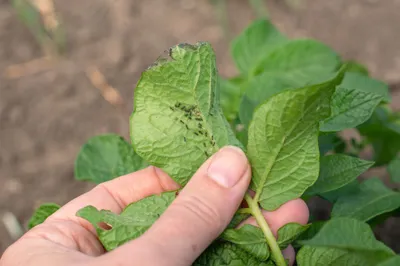
Aphids: Suck sap from leaves, turning them yellow. Control: Spray Rogor EC.
Potato Tuber Moth: Larvae drill tunnels into the tubers. Control: Cover potatoes with sand during storage to prevent infestation.
8. Harvesting and Post-Harvest Care
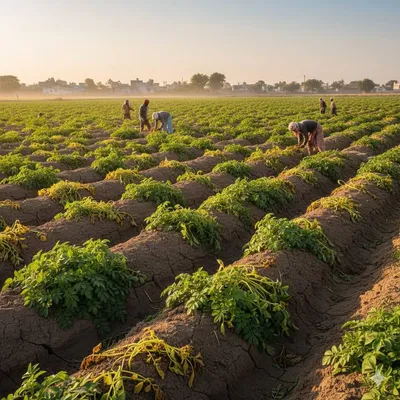
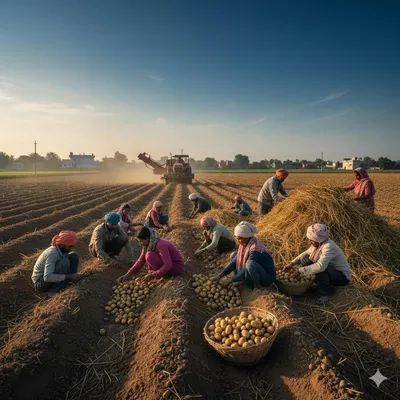
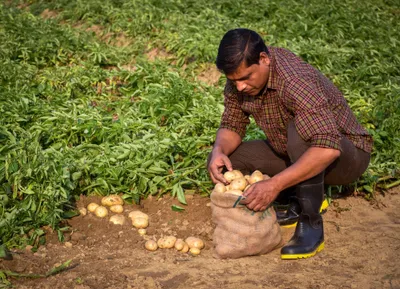
Harvesting is done when the soil is dry. A common technique used by farmers is to kill the vines (the upper green part) using chemicals like Gramoxone Extra about a week before digging. This helps the potato skin set firmly, preventing bruising during harvest. Once dug out, the potatoes are washed, graded by size, and packed. For long-term storage, seed potatoes are kept in cold storage at 2-4°C with high humidity to preserve them for the next season.
This guide breaks down the essential steps to growing potatoes successfully in India.
1. Introduction to the Potato Crop
Botanically known as Solanum tuberosum, the potato belongs to the Solanaceae family. While the plant produces flowers and small green fruits resembling cherry tomatoes, the edible part is the underground tuber. These tubers are rich in carbohydrates, making them a global staple. Potato plants are annuals that grow up to 2 feet in height. Interestingly, the fruits and other green parts of the plant contain a toxin called solanine and are not edible; only the tubers are safe for consumption.
2. Ideal Climate and Temperature
Potatoes are a "cool season" crop. They thrive best in cool climates with bright sunshine during the day and cool nights.
Temperature: Temperature plays a massive role in tuber development. The ideal soil temperature for tuber formation is between 17°C and 19°C. If the temperature rises above 30°C, tuber growth stops because the plant consumes its stored carbohydrates through respiration rather than storing them.
Season: In India, potatoes are primarily a Rabi crop, cultivated between October and December when the weather is pleasant—neither too hot nor too cold.
3. Soil and Land Preparation
To get big, healthy potatoes, the soil needs to be loose and airy.
Soil Type: Loamy soil is the best choice. It allows roots to penetrate easily and gives tubers space to expand. Heavy clay soils should be avoided as they stick to the tubers and restrict their growth.
pH Level: The soil should be slightly acidic, with a pH between 4.8 and 5.4. This range encourages carbohydrate storage in the tubers.
Preparation: The land must be ploughed 2-3 times and harrowed to break up clods. Any hard rocks or pans must be removed, as they interfere with water circulation and root growth. When making beds, keep a distance of 60–90 cm between them.
4. Popular Potato Varieties
India cultivates several commercial varieties, mostly developed to suit different regional climates.
Kufri Sindhuri: Red, round tubers. Matures in 3.5 to 4.5 months. Ideal for North Indian plains.
Kufri Chandramukhi: White, oval tubers. Known for cooking quickly and high yield.
Kufri Jyoti: Resistant to late blight disease and widely adaptable in Central and Southern plains.
Kufri Sheetman: A frost-resistant variety suitable for North Indian winters.
5. Planting and Seed Treatment
Planting requires careful timing and preparation.
Timing: In the Central plains (MP, Gujarat), planting is done in October-November. In the hills, it is a summer crop planted in March-April.
Seed Material: Use high-quality seed tubers weighing 50-60g. Ensure the tubers have "eyes" (buds) for sprouting.
Treatment: Before sowing, treat seeds with 0.3% Mancozeb. This step is crucial to prevent soil and tuber-borne diseases.
6. Water and Weed Management
Potatoes need consistent moisture but cannot tolerate waterlogging.
Irrigation: The crop generally needs 4-5 mm of water daily. The first irrigation should happen immediately after sowing to help germination. In cooler areas like Punjab, weekly irrigation suffices. Stop watering about 10-15 days before harvest to allow the potato skin to harden.
Weeding: Weeds compete for nutrients and light. The first 4-6 weeks are critical. Farmers often use herbicides like Metribuzin (pre-emergence) or manual weeding to keep the field clean.
7. Diseases and Pest Control
Potatoes are susceptible to various diseases, so vigilance is required.
Common Diseases:
Late Blight: Causes rotting of leaves and tubers. Control: Spray fungicides like Dithane M-45 every 10 days.
Early Blight: Causes brown-black rings on leaves. Control: Burn crop debris after harvest to kill the fungus.
Black Scurf: Creates a black crust on tubers, making them unsellable. Control: Dip seeds in Agallol solution before planting.
Bacterial Wilt (Brown Rot): Causes sudden wilting. Control: Use certified disease-free seeds.
Common Pests:
Cutworms: They cut young plants at the soil surface. Control: Flood the field or use carbofuran.
Aphids: Suck sap from leaves, turning them yellow. Control: Spray Rogor EC.
Potato Tuber Moth: Larvae drill tunnels into the tubers. Control: Cover potatoes with sand during storage to prevent infestation.
8. Harvesting and Post-Harvest Care
Harvesting is done when the soil is dry. A common technique used by farmers is to kill the vines (the upper green part) using chemicals like Gramoxone Extra about a week before digging. This helps the potato skin set firmly, preventing bruising during harvest. Once dug out, the potatoes are washed, graded by size, and packed. For long-term storage, seed potatoes are kept in cold storage at 2-4°C with high humidity to preserve them for the next season.
Tags
potato farming