Farming (Agronomy)
Protecting Rain-Affected Potato Seed: A Practical Post-Harvest Guide
6 February 2026
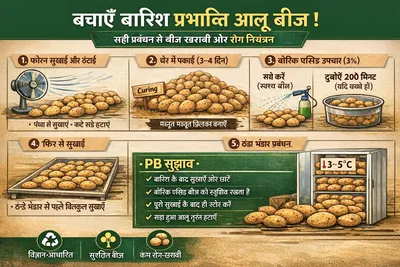
Protecting Rain-Affected Potato Seed: A Practical Post-Harvest Guide
Why This Matters
Unseasonal rain during harvest increases the risk of tuber damage, skin immaturity, and storage diseases in potatoes. If rain-affected seed is stored without proper handling, farmers may face high seed losses, poor germination, and disease spread in the next crop cycle.
This knowledge note outlines scientifically validated steps to preserve potato seed quality, reduce storage losses, and protect planting material.
1. Immediate Drying & Sorting Is Critical
After harvest, rain-affected tubers must be completely dried before any storage or movement.
PB Recommendation
Use forced air fans or natural ventilation to remove surface moisture.
Spread tubers thinly; avoid piling wet potatoes.
Remove all cut, bruised, and rotting tubers immediately, as they act as infection sources in heaps and cold stores.
Why it works: Moisture on tubers encourages soft rot and fungal infections. Dry surfaces slow disease development.
2. Heap Storage for Skin Maturity (Curing Stage)
Before grading or long-term storage, tubers should be kept in heaps for a few days under well-ventilated conditions.
PB Insight
This curing phase allows the skin (periderm) to mature, reducing peeling during grading.
Mature skin lowers disease entry points and improves handling durability.
Best practice: Avoid direct sunlight; maintain airflow.
3. Boric Acid Treatment for Disease Protection
For seed potatoes, 3 % boric acid treatment is a proven, low-cost disease control method.
Treatment Options
Spray treatment (3 %) → For visually healthy seed lots
Dip treatment (3 % for 20 minutes) → If common scab symptoms are present
Scientifically supported benefits:
Controls common scab & black scurf
Reduces dry rot and soft rot during storage
Improves overall seed health and storability
(Recommended by CPRI scientists and supported by state agri extension advisories)
4. Re-Drying Before Cold Storage
After chemical treatment:
Allow tubers to dry completely again
Ensure no surface moisture before loading into cold storage
PB Warning: Storing wet or half-dry treated seed significantly increases rot risk.
5. Cold Storage Management
For seed potatoes:
Maintain low temperature (2–4 °C)
Ensure proper air circulation
Avoid overcrowding in crates or heaps
Regular monitoring is essential. Any rotting tubers should be removed immediately to prevent spread.
PB Takeaways (For Farmers, Traders & Cold Storages)
Rain damage does not mean seed loss — right handling saves value
Drying + curing + treatment = strong seed protection
Boric acid is a cost-effective, research-backed solution
Poor pre-storage handling causes more loss than storage itself
Expert Reference
Guidance based on recommendations from CPRI scientists, FAO post-harvest practices, and state agricultural extension advisories.
Why This Matters
Unseasonal rain during harvest increases the risk of tuber damage, skin immaturity, and storage diseases in potatoes. If rain-affected seed is stored without proper handling, farmers may face high seed losses, poor germination, and disease spread in the next crop cycle.
This knowledge note outlines scientifically validated steps to preserve potato seed quality, reduce storage losses, and protect planting material.
1. Immediate Drying & Sorting Is Critical
After harvest, rain-affected tubers must be completely dried before any storage or movement.
PB Recommendation
Use forced air fans or natural ventilation to remove surface moisture.
Spread tubers thinly; avoid piling wet potatoes.
Remove all cut, bruised, and rotting tubers immediately, as they act as infection sources in heaps and cold stores.
Why it works: Moisture on tubers encourages soft rot and fungal infections. Dry surfaces slow disease development.
2. Heap Storage for Skin Maturity (Curing Stage)
Before grading or long-term storage, tubers should be kept in heaps for a few days under well-ventilated conditions.
PB Insight
This curing phase allows the skin (periderm) to mature, reducing peeling during grading.
Mature skin lowers disease entry points and improves handling durability.
Best practice: Avoid direct sunlight; maintain airflow.
3. Boric Acid Treatment for Disease Protection
For seed potatoes, 3 % boric acid treatment is a proven, low-cost disease control method.
Treatment Options
Spray treatment (3 %) → For visually healthy seed lots
Dip treatment (3 % for 20 minutes) → If common scab symptoms are present
Scientifically supported benefits:
Controls common scab & black scurf
Reduces dry rot and soft rot during storage
Improves overall seed health and storability
(Recommended by CPRI scientists and supported by state agri extension advisories)
4. Re-Drying Before Cold Storage
After chemical treatment:
Allow tubers to dry completely again
Ensure no surface moisture before loading into cold storage
PB Warning: Storing wet or half-dry treated seed significantly increases rot risk.
5. Cold Storage Management
For seed potatoes:
Maintain low temperature (2–4 °C)
Ensure proper air circulation
Avoid overcrowding in crates or heaps
Regular monitoring is essential. Any rotting tubers should be removed immediately to prevent spread.
PB Takeaways (For Farmers, Traders & Cold Storages)
Rain damage does not mean seed loss — right handling saves value
Drying + curing + treatment = strong seed protection
Boric acid is a cost-effective, research-backed solution
Poor pre-storage handling causes more loss than storage itself
Expert Reference
Guidance based on recommendations from CPRI scientists, FAO post-harvest practices, and state agricultural extension advisories.
Tags
#PostHarvestManagement#ColdStorageCare#PBKnowledge